

Fish
Allantic Croacker (Micropogon undulatus)
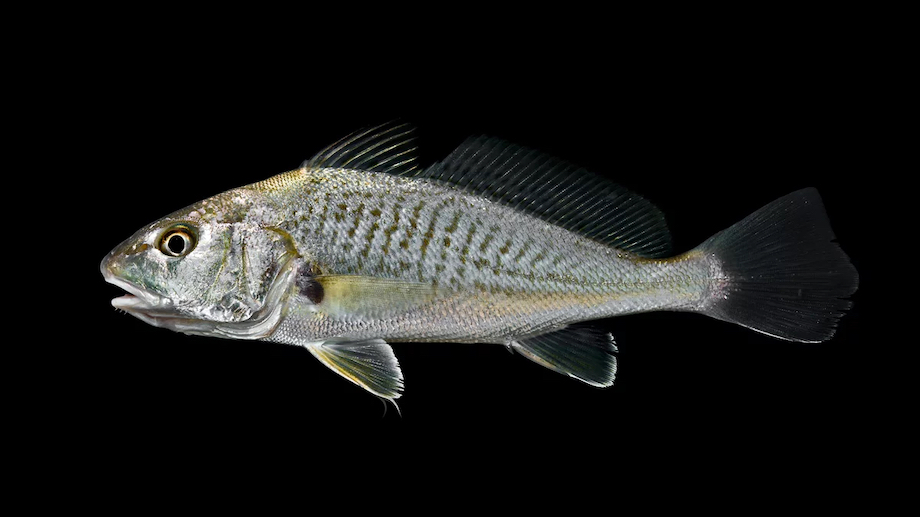
The Atlantic Croacker is a fish in the family Sciaenidae. It is similar in shape to a European sea bass, with a pearly silver coloration and a yellow mouth. Its length can range from 40-50 centimeters to 2 meters in length, with weights up to 55 kilograms. The maximum reported age of this species is 8 years. Corvinas feed on a variety of worms, mollusks, crustaceans and small fish.
Adults spend the spring and summer months in estuaries on mud or sand bottoms in areas of low to moderate salinity, and in the fall migrate offshore to spawn over a wide area of the continental shelf, returning to estuaries in the spring.
Typical of fish in its family (Sciaenidae), the sonic muscle is the swim bladder but unlike other sciaeneids both male and female Atlantic corvina have sonic muscles. The sound is used by mature males to court spawning females, and by immature females and individuals as a startle response.
The English name for Atlantic Corvina is CROACKER (“making CROACK”) in reference to the sound produced by these fish.
Barred Grunt (Conodon Nobilis)
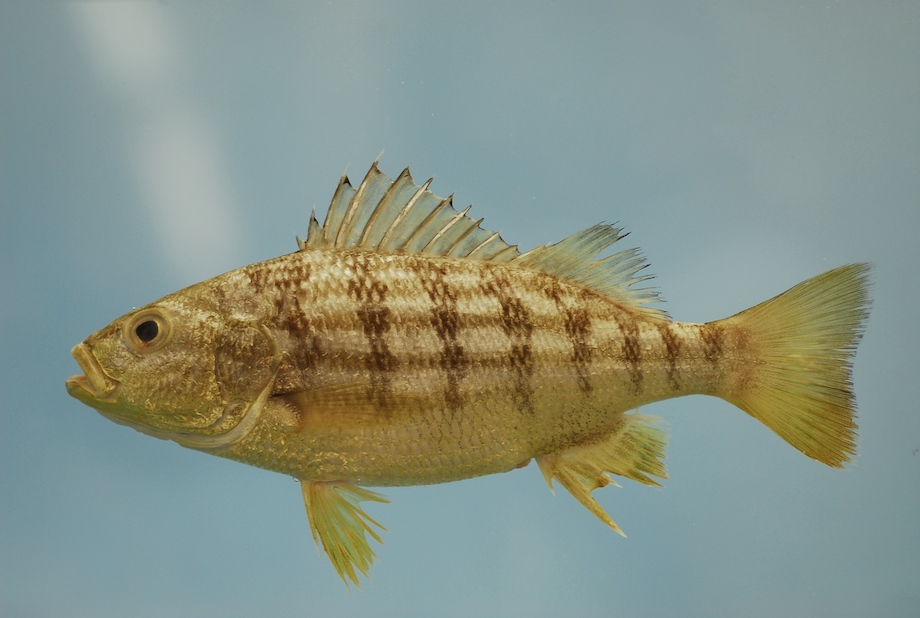
The Barred Grunt is encountered from the northern Gulf of Mexico through the Caribbean to Brazil. Adults inhabit deeper waters (up to 100 m) on rocky or coral bottoms during the day, but move toward the coast at night to feed. Juveniles remain mainly in estuaries or seagrass beds near the coast.
This species reaches maturity by its second or third year and reaches an estimated maximum age of 10 years.
The Barred Grunts possess prominent pharyngeal teeth. The stridulation of the pharyngeal teeth produces sounds that are then amplified by the swim bladder. These sounds may be associated with feeding, but may also function as a startle response when the fish is caught, handled, or otherwise distressed. Both males and females produce sounds.
Sand Seatrout (Cynoscion arenarius)
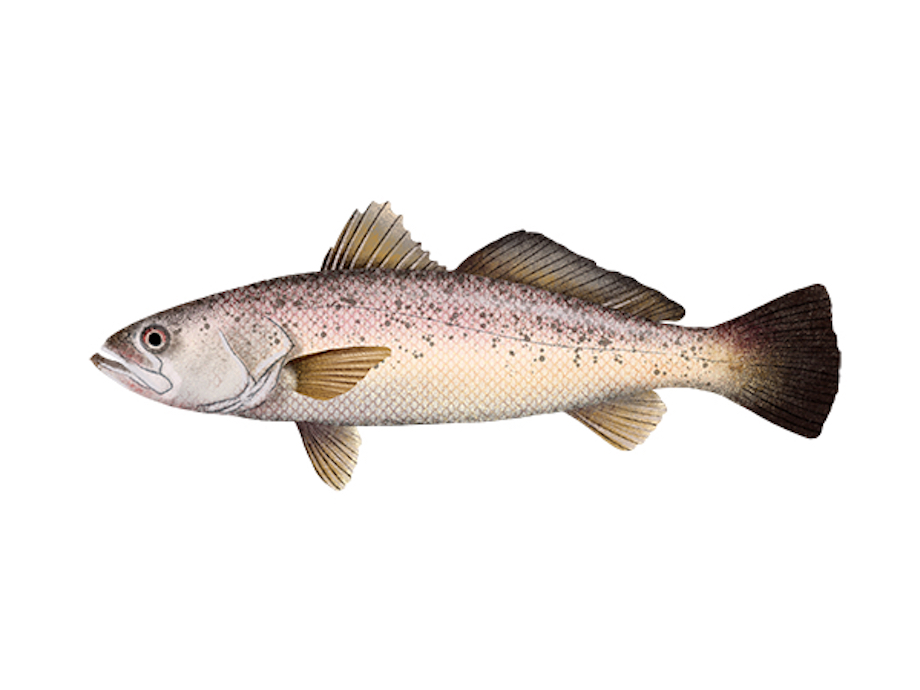
Sea Trout are commonly found on muddy or sandy bottoms of estuaries, bays, lagoons, and coastal waters. Spawning occurs from early spring to the summer months within deeper waters.
Male sea trout produce a sound that is used during courtship and spawning. These sounds are produced by vibrating the sonic muscle against the swim bladder membrane. Sound production begins around sunset each night during the spawning season and lasts for several hours.
Clownfish (Amphiprion ocellaris)
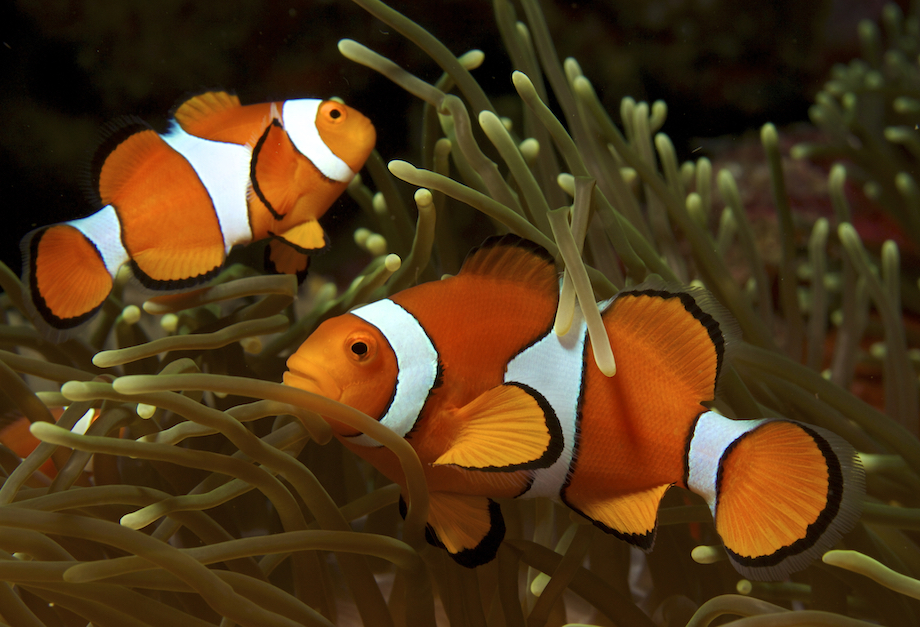
Clownfish are tropical marine fishes found in the warmer waters of the ocean basins of India and the Pacific. There are 28 species of clownfish whose body coloration varies from yellow, orange, or red/black with white vertical bars or spots. The largest species of clownfish can reach 18 cm while the smallest measure 10 cm.
Clownfish live in small colonies within a host anemone. The clownfish and anemone share a symbiotic relationship, where both animals benefit. Clownfish are grouped in male/female breeding pairs and multiple non-breeding males and juveniles. The largest and most dominant is the breeding female.
Fun fact: If the female in a group dies, the largest male changes sex to become a breeding female.
Clownfish produce sounds during competitive interactions that help maintain hierarchy. Sounds are produced when jaw teeth clash when the jaw closes rapidly. Chirps last an average of 89 ms and contain multiple sounds of different durations. Subordinate males do not produce chirps or pops but produce hydrodynamic sounds generated by continuous head shaking.
The dominant frequency and pulse length of sounds are strongly correlated with clownfish size; larger individuals produce lower frequency and longer duration pulses than smaller individuals.
Hardhead Catfish (Ariopsis felis)
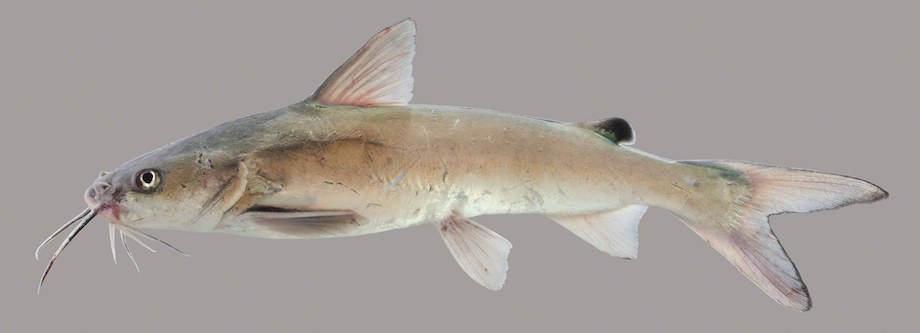
The sea catfish is common on the muddy or sandy bottoms of bays and shallow coastal waters of the Americas. Spawning occurs in bays during the spring and summer months: the male retains the fertilized eggs in his mouth until hatching – for a period of up to eighty days! After hatching, the young will remain in the adult’s mouth for a period of up to two weeks in which the adult male does not feed. The reproductive strategy of this species is an example of a very high degree of paternal care.
There is evidence to suggest that sound production in this species can be quite differentiated in terms of mechanism and context. Thin bones connect to the surface of the swim bladder and are made to vibrate by a pair of specialized sound muscles. Sound is also produced by the stridulation of the pectoral spines against the pectoral girdle and the grinding of the pharyngeal teeth.
Scholar Tavolga (1977) argued convincingly that this species employs a crude form of sonar where the sounds produced appear to be used as a form of echolocation (also indicating directional listening ability). It is also likely that sound production is associated with courtship and egg-laying and perhaps other social behaviors.
Weakfish (Cynoscion regalis)
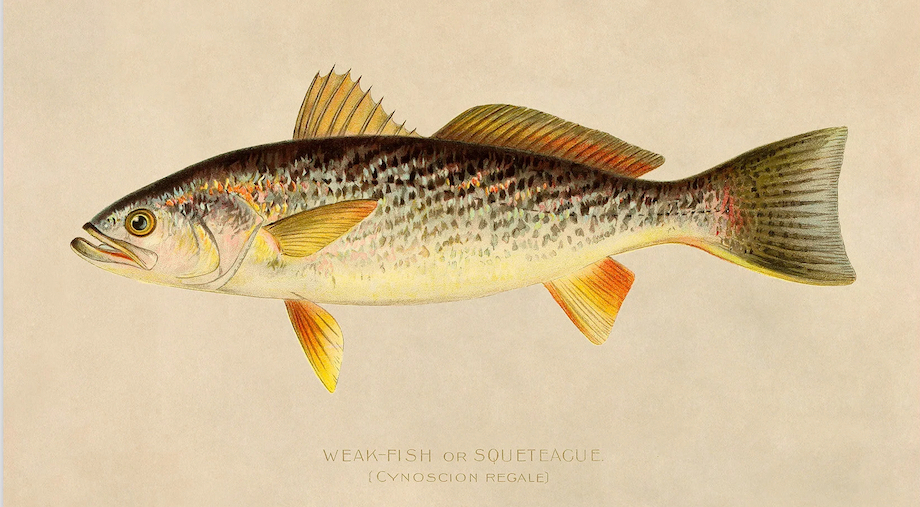
This species inhabits coastal and offshore waters of the Atlantic from Cape Cod, Massachusetts to Florida.
The Weakfish has a lifespan of about 12 years, but can live up to 17 years.
The “weakfish,” as well as other members of the family Sciaenidae, produces sound through the use of the sonic muscle on the swim bladder. Weakfish sonic muscles are present only in males and run the length of the body cavity in close association with the swim bladder, but not directly attached to it. Contraction and relaxation of the sonic muscles cause rapid movements of the swim bladder resulting in the production of sounds. The sounds produced by male weakfish are used to court females for spawning.