Corallo Sonoro · 1
Cetáceos odontocetos

Texto original en inglés.
Bottlenose dolphin (Tursiops truncatus)
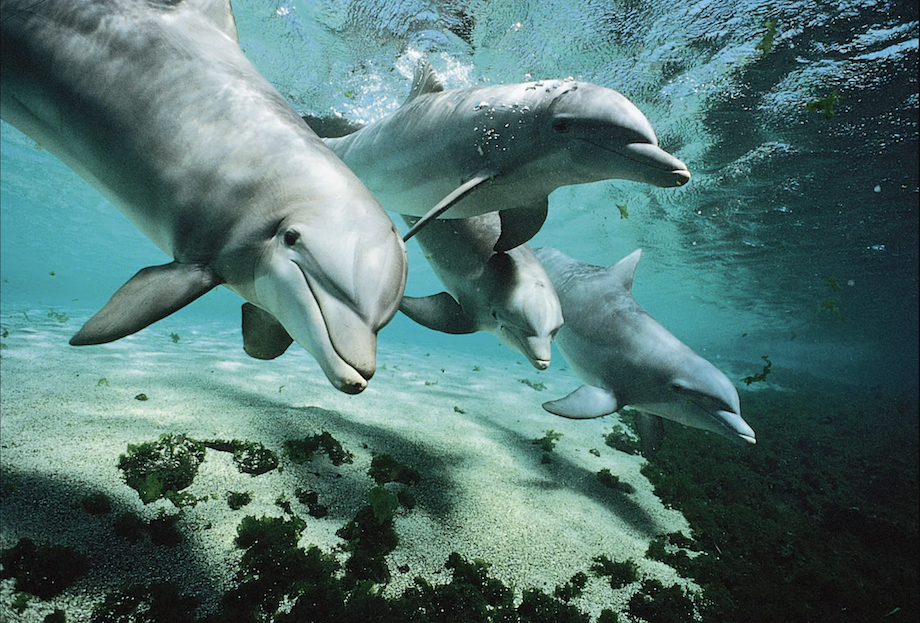
The bottlenose dolphin (Tursiops truncatus, 1821) is an odontocete cetacean belonging to the family Delphinidae. It is widespread in all the world’s seas except the Arctic and Antarctic areas, and there are two distinct populations, one coastal and one offshore. It reaches sexual maturity around 12 years of age, and females give birth to a single young and can grow to about 3.9 m in length. It generally lives in flocks formed by females and young, while males may form associations called “alliances.” Because of media influence (the famous dolphin in the television series Flipper was a bottlenose dolphin), it has become the quintessential dolphin.
Bottlenose dolphins produce a large number of vocalizations, including whistles, buzzes, pops, squeals, yelps and clicks. They communicate with whistle vocalizations and use echolocation through a series of high-frequency clicks (about 110-130 kHz) for prey detection. These dolphins are able to combine echolocation clicks into short series or elaborate trains of sounds. Individually distinctive whistles are thought to be used to convey the identity and location of the calling animal in a group.
Sperm whale (Physeter macrocephalus)
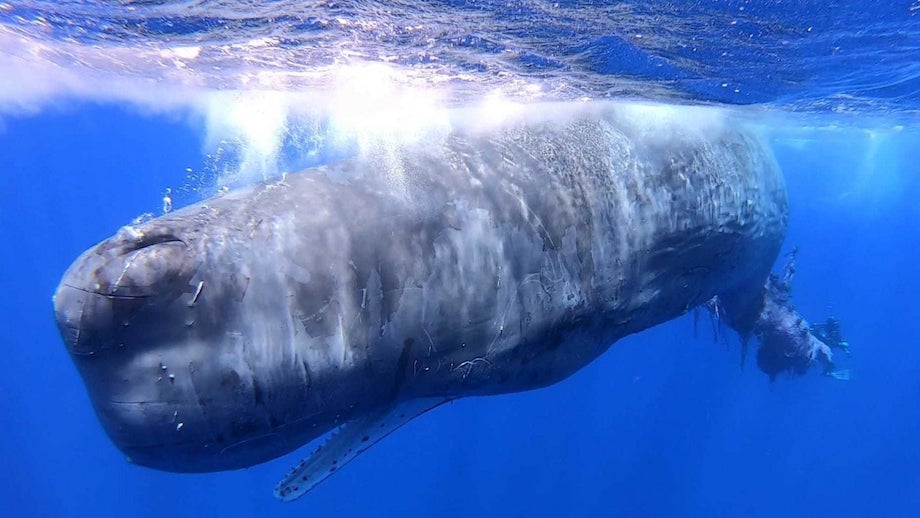
The sperm whale (Physeter macrocephalus) or physeter (from the Greek φῡσητήρ, phȳsētḗr, “blowing,” “blowing”) is the largest of all Odontocetes and the largest living animal with teeth: in fact, it measures up to 18 meters in length. The sperm whale’s enormous head and characteristic shape, as well as the central role it plays in Herman Melville’s Moby-Dick, have allowed many to describe it as the archetypal whale. Also because of Melville, the sperm whale is commonly associated with the Leviathan of the Bible.
Sperm whale vocalizations include directional clicks, from less than 100 Hz to 30 kHz. Most of the energy in these clicks is between 5 and 25 kHz. In addition to echolocation, in social situations, sperm whales produce repeated patterns of clicks called “codas,” which are used to attract females, compete for mates, show aggression and maintain group cohesion.
During feeding, sperm whales generally emit regularly spaced clicks interrupted by “crunches” and very rapid clicks associated with short-range sonar and the last stages of prey capture.
Killer Whale (Orcinus orca)
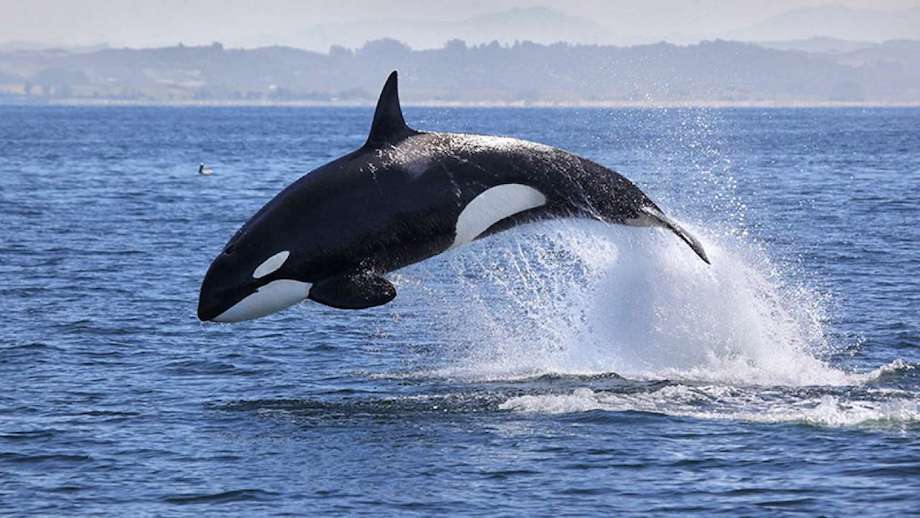
The killer whale (Orcinus orca) is a marine mammal belonging to the family Delphinidae (odontocete cetaceans).
The killer whale is found throughout the ocean, from the Arctic to the Antarctic. These odontocetes are easily identified by their striking black and white coloration and tall dorsal fin, up to 1.8 m high in males.
Males can grow to about 9.5 m in length and weigh eight to nine tons; females are smaller, growing only to about 8 m and weighing about four tons.
Killer whales are found in family groups called pods. Three types of pods have been described: resident pods, which remain stable over time; temporary pods, which change constantly; and offshore pods, which are seen only in outer coastal waters and about which very little is known. The pods usually number between 5-30 individuals and are led by females.
Killer whales have a very broad diet, although individual populations specialize in particular types of prey. Some feed exclusively on fish, while others hunt birds and penguins, marine mammals such as sea lions, seals, whales, and dolphins.
Killer whales produce sounds for echolocation and communication. Scientists studying orca recordings have shown that each pod has a specific dialect. The sounds produced by an orca range from about 0.1 kHz to about 40 kHz. They produce pulsed and clicking sounds at speeds of up to 5,000 per second.